Plenary - Navigating Tomorrow: Developing Futures Literacy and Adaptive Leadership

The accelerating pace of AI and emerging technologies introduces unprecedented volatility, uncertainty, complexity, and ambiguity (VUCA) to our learning environment. Relying solely on established practices can feel deeply unsettling. This session will demonstrate why Futures Literacy, the ability to understand why and how to use the future, is a critical capacity for every faculty member, staff professional, and student to develop. We’ll explore how practicing Adaptive Leadership enables individuals at all levels to engage in the work of change. Learn practical, hands-on tools to embrace experimentation, challenge outdated assumptions (“unlearning” our past mental models), and move from simply reacting to future shocks to actively shaping a thriving future for our entire university community.

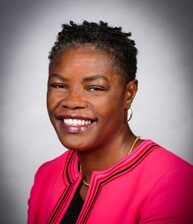
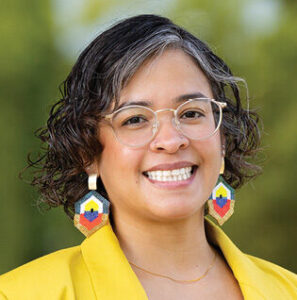
Maricel Lawrence, Innovation Catalyst

Dr. Maricel Lawrence is the Innovation Catalyst at Purdue Global, where she plays a key role in shaping the future of education and work. She earned her Doctor of Education in Leadership & Innovation from Arizona State University, her master’s in adult education and training from Colorado State University, and her bachelor’s degree in Spanish from Indiana University. Maricel’s career in higher education began at Purdue University, where she contributed to the development and launch of online courses and programs. Before joining Purdue Global, she served as the executive director of UMOnline at the University of Montana, where she worked closely with the university’s colleges to identify growth opportunities based on learner needs, workforce demands, and industry trends.

TCC Hawaii invites faculty, researchers, librarians, counselors, student affairs and student support professionals, graduate students, administrators, and consultants from around the world interested in evolving technologies and learning practices to submit proposals for this online conference.

Plenary - Nurturing Socially Just Care Ecosystems While Facing Uncertainty in Education

In this interactive plenary session, participants will have opportunities to reflect on how we can nurture socially just care ecosystems in education. We will discuss, explore and apply the Equity/Care matrix, Compassionate Learning Design, the Roumy Cheese analogy, and the practice of Intentionally Equitable Hospitality. Participants will have a choice to dig deeper on a topic of their choice, either an exploration of building compassionate community online, a compassionate approach to AI in education, an exploration of the relationship between oppression and AI, or systemic reasons leading to moral injury.

Maha Bali, Professor of Practice

Maha Bali is Professor of Practice at the Center for Learning and Teaching at the American University in Cairo. She has a PhD in Education from the University of Sheffield, UK. She is co-founder of virtuallyconnecting.org (a grassroots movement that challenges academic gatekeeping at conferences) and co-facilitator of Equity Unbound (an equity-focused, open, connected intercultural learning curriculum, which has also branched into academic community activities Continuity with Care, Socially Just Academia, a collaboration with OneHE: Community-building Resources and MYFest, an innovative 3-month professional learning journey. She writes and speaks frequently about social justice, critical pedagogy, and open and online education. She blogs regularly at https://blog.mahabali.me and tweets @bali_maha.

TCC Hawaii invites faculty, researchers, librarians, counselors, student affairs and student support professionals, graduate students, administrators, and consultants from around the world interested in evolving technologies and learning practices to submit proposals for this online conference.

AI on AI: Profiles, Perspectives, Possibilities

Almost overnight, artificial intelligence (AI) has become a topic of conversation and is being implemented in most higher education settings. However, many faculty members and administrators expect aggressive AI-driven changes in the next five years, they believe their institutions are not ready to support those changes, with serious concerns about the ethical issues that will arise from AI implementation. The purpose of this interactive forum is to discuss contemporary ethical and social issues on how AI is currently being used, experienced, and integrated into higher education. Participants will be surveyed on four categories of AI-adoption profiles (Mah & Groß, 2024) and will be provided with a profile description for future reference and professional growth. The Forum will continue discussing how AI was used to create a systematic literature review that isolated eight common AI themes, with a significant overload of ethical themes over perceptions, experiences, assimilation, literacy, challenges, opportunities, and future applications of AI. Data showed ethical issues and concerns related to the AI paradox, academic and digital information integrity, institutional governance, curriculum considerations, professional development, and teaching and learning. This forum will also integrate anecdotal information on current AI-classroom dilemmas and will provide recommendations to approach ethical issues in teaching and learning. Participants will be continually engaged in interactive activities throughout the forum, including engaging in an AI-adoption survey, quick polls, anticipating research findings through different digital games, and discussing their unique institutional experiences in AI adoption and implementation.

Michelle Cranney, DeVry University, US

Dr. Michelle Cranney is an Associate Professor at DeVry University with over 25 years in Health Sciences education. She has experience in program development, curriculum design, accreditation, and instructional design, along with more than 20 years in healthcare. She holds undergraduate degrees in Personal Finance and Health Information Management, an MBA in Healthcare Management, and a Doctorate in Health Sciences. As a first-generation college student, she is passionate about empowering others to achieve their educational goals.


Dr. Jacqueline Saldana, DeVry University,US

Dr. Jacqueline B. Saldana is an Assistant Dean of Teaching and Learning at DeVry and college professor with over 30 years of experience in program development, leadership, and TQM consulting, and Certified Adult Learning Education trainer with 15+ years in higher education. Experienced strategic manager and policymaker specialized in strategic communications and change management. Holds a BA, MBA, and Doctorate in Organizational Leadership. Active researcher with publications in journals and textbooks across Australia, Canada, and the United States.

TCC Hawaii invites faculty, researchers, librarians, counselors, student affairs and student support professionals, graduate students, administrators, and consultants from around the world interested in evolving technologies and learning practices to submit proposals for this online conference.

Plenary - TCC 2026 The EduBot-a-thon: Building to Think in a Philosophy of Education Classroom

Custom AI chatbots built by faculty and staff are increasingly common, supporting learning, feedback, motivation, and more. This same technology takes on a new dimension when students are put in the driver’s seat. The EduBot-a-thon is a teaching artifact developed over two years, in which students progress from exploring custom bots to identifying an educational problem, ideating and designing their own custom bot, and implementing it. In the latest iteration, inspired by NASA Space Apps and coding communities, teams assume cross-functional roles, work in time-boxed sprints, and deliver short pitches that clarify a bot’s purpose, boundaries, and intended users. Research findings from student evaluations and reflections will be shared, highlighting how “building AI” and “getting under the hood” cultivates critical AI literacy and purposeful creativity.

Casandra Silva Siblin, Lecturer in Philosophy

Casandra Silva Sibilin is a Lecturer in Philosophy at York College, City University of New York (CUNY), specializing in philosophy of education and the role of generative AI in teaching and learning. She co-founded Don’t AI Alone, a cross-campus community for inclusive, interdisciplinary dialogue across 25 CUNY campuses, and led the Education team for Building Bridges of Knowledge, a CUNY-wide fellowship supporting ethical and effective student AI use. Her work includes open educational resources that help educators and students design their own AI tools, including Student-Made Bots: An Educator’s Toolkit. Beyond CUNY, she leads the Custom Bots/GPTs subgroup within a global AI in Education community connected to the POD Network. She is currently writing a book on AI pedagogy through the lens of foundational thinkers in philosophy of education.

TCC Hawaii invites faculty, researchers, librarians, counselors, student affairs and student support professionals, graduate students, administrators, and consultants from around the world interested in evolving technologies and learning practices to submit proposals for this online conference.

Plenary - Teaching with AI for Sustainable Instructional Practice

How can we teach with AI while keeping learning human by design? This plenary introduces the “Three Ps of Teaching with AI”: Partnership, Practice, and Principles. Drawing from Bowen and Watson’s framework in Teaching with AI and the Generative AI techniques (GAIT) project, the session explores how AI can be integrated into instructional design in ways that sustain creativity and efficiency. Partnership highlights how AI serves as a collaborator that augments human work. Practice emphasizes transparency and the importance of modelling responsible and purposeful use. Principles anchor the conversation in ethics, equity, and human values. Using the GAIT project as a case study, the session demonstrates how “mini sprints” allow educators to reduce repetitive tasks while preserving creativity and purpose. Attendees will engage in reflection and collaborative visioning to imagine sustainable, human-centred practices. By the end, participants will leave with clear strategies for applying the Three Ps in their own design contexts.

Florence Williams, Faculty Instructional Designer

Florence Williams is an experienced educator and instructional designer at the University of Central Florida. With over two decades of experience in higher education, she revolutionizes course design using research-informed practices to enhance student engagement and success. Her scholarship in instructional design promotes inclusive practices and faculty development, resulting in several highly regarded publications. Her cultural competence, gained through leading higher education curriculum development in 21 anglophone Caribbean countries, enriches her approach, guiding the creation of culturally responsive learning materials. Florence is a sought-after speaker, sharing insights on inclusive excellence in higher education. Her research focuses on innovative instructional design strategies that push the boundaries of traditional teaching methods, particularly in online and blended learning environments. When not transforming educational practices, Florence enjoys being outdoors and gardening. A lifelong learner, she continuously updates her skills, exploring emerging technologies and pedagogies to enhance her practice.

TCC Hawaii invites faculty, researchers, librarians, counselors, student affairs and student support professionals, graduate students, administrators, and consultants from around the world interested in evolving technologies and learning practices to submit proposals for this online conference.

Plenary - The Promise and Pitfalls of AI in Academia: Cultural and Scholarly Impact

Nearly every major organization is currently grappling with how to integrate artificial intelligence within its own sphere of influence, from business and industry to education and the community. Questions surrounding use, creativity, and potential are considered equally with concerns about misuse, policy, and ethics. Many institutions may focus on issues with a global impact in mind. However, while the promise of AI may have far reaching effects globally, it will also result in significant consequences locally. With that in mind, this session will present AI considerations for practice in academia with particular focus on scholarly and cultural impact in the Pacific region. Finally, the presentation will allow for audience questions and discussion.

Michael Menchaca, Professor

Michael Menchaca is a Professor in the Department of Learning Design and Technology at the University of Hawai’i at Manoa. He specializes in distance education, and has designed, implemented, and coordinated online and hybrid programs for over 25 years. Dr. Menchaca has worked extensively in the Pacific Region and internationally, providing culturally-sustaining technology training, assisting in the development of regional technology plans, delivering keynote presentations, participating in expert panels, and collaborating with academic and community partners. He was recently honored with the Association for Educational Communications Technology’s International Division’s 2025 International Contribution Award. Dr. Menchaca also serves as editor for the International Academic Forum’s (IAFOR) Journal of Education: Technology in Education issue. He was an IT specialist for many years in the public and private sector. He teaches and conducts research in the areas of online learning, technology integration, artificial intelligence, and social justice with technology.

TCC Hawaii invites faculty, researchers, librarians, counselors, student affairs and student support professionals, graduate students, administrators, and consultants from around the world interested in evolving technologies and learning practices to submit proposals for this online conference.

Plenary - Creativity and the Future of Learning: Designing Education for What Comes Next

Education systems are navigating unprecedented challenges, from rapid technological change and growing inequities to increasing uncertainty about the future of work and learning. In response, creativity is often named as a critical competency; yet it is frequently treated as an add-on and narrowly framed as innovation, artistic expression, or isolated classroom activities, rather than as a core pedagogical approach. This space will invite practitioners and academic leaders to rethink creativity as a foundational capacity for navigating complexity and designing meaningful learning experiences. It proposes creativity as the basis for creative pedagogy, a way of teaching creatively, teaching about creativity, and fostering creative learning across educational contexts. Through this lens, creativity becomes a human-centered and strategic response to educational challenges, supporting learners and educators in developing self-awareness, adaptability, and purpose. Participants will leave with new ways of understanding creativity as an ethical and human response to the challenges shaping the future of learning, along with a renewed sense of agency to design education for what comes next.

Carolina Cuesta-Hincapie, Associate Professor

Carolina Cuesta-Hincapié is an Associate Professor in the Marketing and Innovation area at the Business College of EAFIT University in Colombia. She holds a PhD in Curriculum and Instruction and a master’s degree in Education from Purdue University. Her research explores the intersection of creativity and instructional design, focusing on designing learning environments that foster creative thinking, futures thinking, creative self-efficacy, and learner agency. Her recent publications include a critical examination of the PISA 2022 Creative Thinking assessment, analyzing the alignment between creativity theory and large-scale educational measurement. With an interdisciplinary background in Microbiology, Innovation Management, and Learning Design and Technology, Dr. Cuesta-Hincapié brings both scholarly and practical perspectives to her work. She taught Entrepreneurship and Innovation for 7 years in Colombia, integrating creativity-centered pedagogical approaches to support creative learning and the development of an entrepreneurial mindset across higher education contexts. Beyond academia, Dr. Cuesta-Hincapié collaborates on regional initiatives that bridge research, practice, and policy in Latin America and the Caribbean. Her work includes Creativity: Skills for Life, published with the Inter-American Development Bank, and ongoing projects on intercultural creative thinking as an inclusive pedagogical approach that integrates futures thinking and human-centered design to advance educational innovation.

TCC Hawaii invites faculty, researchers, librarians, counselors, student affairs and student support professionals, graduate students, administrators, and consultants from around the world interested in evolving technologies and learning practices to submit proposals for this online conference.

Integrating Technologies into Emergency-Designed Schools: Advancing Accessible and Sustainable Education in Rohingya Refugee Camps

Education in emergencies plays a critical role in sustaining learning, psychosocial well-being, and hope for displaced children. In Cox’s Bazar, Bangladesh, Rohingya refugee children face severe educational barriers due to restrictions on formal schooling, under-resourced Temporary Learning Centers (TLCs), and limited instructional time. This qualitative study explores how smart learning technologies, interactive resources, and innovative pedagogies can enhance access, engagement, and inclusivity in emergency-designed schools.

Drawing on semi-structured interviews with Rohingya university students who previously studied in refugee camps, the study examines lived experiences with technology, perceived benefits of digital and experiential learning, and barriers to implementation. Thematic analysis reveals that offline digital tools, visual and audio-based resources, and culturally grounded storytelling can serve as alternative learning pathways and significantly improve learner engagement, particularly for low-literacy contexts.

Findings also highlight critical challenges, including unstable electricity, limited internet access, gender norms, and teacher preparedness. Participants emphasize the importance of teacher mediation, shared device use, solar-powered solutions, and environmentally responsible approaches to technology integration. The study argues that technology should complement, not replace, teachers and community structures. By centering refugee voices, this research contributes practical, community-informed insights for designing culturally relevant, sustainable educational technology interventions in humanitarian settings.

Habiba Habiba, Asian University for Women (AUW), BD

Habiba is a Rohingya educator, researcher, and advocate from Myanmar. She holds a degree in Public Health from the Asian University for Women (AUW) and is currently pursuing a Master of Education. She serves as a Rohingya Students Coordinator in the Pathway Program at AUW in Chittagong, where she provides academic support, assists with admissions processes, and mentors newly admitted students. Her work focuses on education in emergencies, technology integration, and improving access to quality education for Rohingya youth.


Omar Salma, Asian University for Women (AUW), BD

Omar Salma is a humanitarian, researcher, and educator from Myanmar. She holds a degree in Public Health from the Asian University for Women (AUW) and is currently pursuing a Master of Arts in Education. She serves as a Wellness Coordinator at AUW, where she mentors and supports students, mainly from the Rohingya community. Her research focuses on education in emergencies, higher education, community health, and sustainable development in displacement settings. Beyond her work, she is also a photographer, interpreter, and storyteller who enjoys traveling.


Parmin Fatema, Asian University for Women (AUW), BD

Parmin Fatema is a writer and poet from northern Rakhine (Arakan) State, Myanmar. I live in the refugee camps in Cox’s Bazar, Bangladesh. I previously served as a female team leader with a humanitarian agency and now work as the AUW Laboratory School Coordinator & Rohingya Students Supervisor. I hold a B.Sc. in Environmental Science and am pursuing an MA in Education at the Asian University for Women. Through my writing and photography, I share my community’s experiences and struggles.

TCC Hawaii invites faculty, researchers, librarians, counselors, student affairs and student support professionals, graduate students, administrators, and consultants from around the world interested in evolving technologies and learning practices to submit proposals for this online conference.

Digital Literacy and Generative AI Awareness among Bamyan University Students: A Quantitative cross-sectional

Digital literacy has become essential for academic participation, information access, and employability in higher education. Yet quantitative evidence on digital literacy and awareness of generative artificial intelligence (AI) remains limited in marginalized and conflict-affected regions such as Afghanistan. This quantitative cross-sectional study investigates digital literacy, mobile-based learning practices, and knowledge of generative AI among 21 undergraduate students at Bamyan University. Using descriptive statistics, ANOVA, correlation, and regression analysis, the study identifies patterns of technology use and examines predictors of effective information evaluation. Findings show that students rely heavily on mobile phones for learning, while their knowledge of generative AI remains extremely low. No significant differences were found across academic years in digital literacy acquisition. Regression analysis reveals that digital platform use is a strong predictor of students’ ability to evaluate information reliably (p = .010), whereas variables related to AI knowledge and year of study did not predict critical literacy. As one of the first quantitative inquiries in this context, the study highlights urgent needs for curriculum reform, improved technological infrastructure, and the integration of AI literacy into Afghan higher education.

Halima Shafai, Asian University for Women (AUW), BD

Halima Shafai is originally from Afghanistan and is currently pursuing a Master’s degree in Education at the Asian University for Women in Bangladesh. She has a strong interest in education and is committed to contributing to the development of equitable learning opportunities.


Norafshan Nikben, Asian University for Women (AUW), BD

Norafshan Nikben is a student of the Asian University for Women, currently pursuing a Master’s degree in Education. She is an Afghan educator with over eight years of teaching and educational coordination experience in challenging contexts. Her work focuses on girls’ education, community-based learning, and educational equity. She is passionate about empowering marginalized communities through inclusive and sustainable education initiatives.


Nilab Azimi, Asian University for Women (AUW), BD

Nilab Azimi holds a bachelor’s degree in Education from Jawzjan University and is currently pursuing a Master’s degree in Art Education. She has more than five years of experience working as a reporter with Radio Sarayesh and Radio Payam Banoo, where she focused on social and educational issues.

She has also worked in a USAID-funded program that aimed to empower women through awareness and community engagement. Currently, she is an intern in the MA Admission Office, where she supports academic and administrative tasks.

Nilab is passionate about education, media, and women’s empowerment. She is fluent in Pashto, Dari, and English

TCC Hawaii invites faculty, researchers, librarians, counselors, student affairs and student support professionals, graduate students, administrators, and consultants from around the world interested in evolving technologies and learning practices to submit proposals for this online conference.

Learning with Embodied Agents: A Descriptive Review of Pedagogical Agent Research (2000–2025)

Pedagogical agents (PAs) are embodied on-screen characters designed to guide learners through computer-based educational environments. Despite decades of research, questions remain about their effectiveness and optimal design. This descriptive literature review, a work-in-progress, synthesizes over twenty-five years of pedagogical agent research (2000–2025) to identify influential studies and examine how they have shaped the field’s trajectory. A systematic search across ten databases and six educational technology journals yielded 4,137 initial records. After screening and applying exclusion criteria, 459 reports were identified for data extraction and assessed for publication source, theoretical foundation, research method, and findings. Publication trends identified Computers and Education as the leading journal. Analysis revealed Social Agency Theory as the dominant theoretical foundation, followed by Cognitive Load Theory. Methodological patterns showed the predominance of experimental designs in highly cited work, though many lacked a no-agent control group. Limitations across studies included overrepresentation of adult samples, short intervention durations, and limited use of delayed posttests. This review highlights critical gaps in K-12 research and long-term learning assessment. Implications for researchers and practitioners emphasize the need for rigorous experimental designs, extended interventions, and context-specific design guidelines for effective implementation.

Brian Bays, University of Hawai’i, US

Brian Bays is a University of Hawaii librarian and doctoral student in the Learning Design and Technology program at UH Manoa.  His current research interests include the design of virtual pedagogical agents and the use of human instructor presence in video learning.

TCC Hawaii invites faculty, researchers, librarians, counselors, student affairs and student support professionals, graduate students, administrators, and consultants from around the world interested in evolving technologies and learning practices to submit proposals for this online conference.