Education in emergencies plays a critical role in sustaining learning, psychosocial well-being, and hope for displaced children. In Cox’s Bazar, Bangladesh, Rohingya refugee children face severe educational barriers due to restrictions on formal schooling, under-resourced Temporary Learning Centers (TLCs), and limited instructional time. This qualitative study explores how smart learning technologies, interactive resources, and innovative pedagogies can enhance access, engagement, and inclusivity in emergency-designed schools.
Drawing on semi-structured interviews with Rohingya university students who previously studied in refugee camps, the study examines lived experiences with technology, perceived benefits of digital and experiential learning, and barriers to implementation. Thematic analysis reveals that offline digital tools, visual and audio-based resources, and culturally grounded storytelling can serve as alternative learning pathways and significantly improve learner engagement, particularly for low-literacy contexts.
Findings also highlight critical challenges, including unstable electricity, limited internet access, gender norms, and teacher preparedness. Participants emphasize the importance of teacher mediation, shared device use, solar-powered solutions, and environmentally responsible approaches to technology integration. The study argues that technology should complement, not replace, teachers and community structures. By centering refugee voices, this research contributes practical, community-informed insights for designing culturally relevant, sustainable educational technology interventions in humanitarian settings.
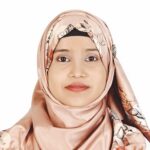 Habiba Habiba, Asian University for Women (AUW), BD
Habiba is a Rohingya educator, researcher, and advocate from Myanmar. She holds a degree in Public Health from the Asian University for Women (AUW) and is currently pursuing a Master of Education. She serves as a Rohingya Students Coordinator in the Pathway Program at AUW in Chittagong, where she provides academic support, assists with admissions processes, and mentors newly admitted students. Her work focuses on education in emergencies, technology integration, and improving access to quality education for Rohingya youth.
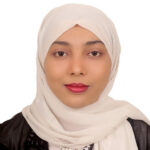 Omar Salma, Asian University for Women (AUW), BD
Omar Salma is a humanitarian, researcher, and educator from Myanmar. She holds a degree in Public Health from the Asian University for Women (AUW) and is currently pursuing a Master of Arts in Education. She serves as a Wellness Coordinator at AUW, where she mentors and supports students, mainly from the Rohingya community. Her research focuses on education in emergencies, higher education, community health, and sustainable development in displacement settings. Beyond her work, she is also a photographer, interpreter, and storyteller who enjoys traveling.
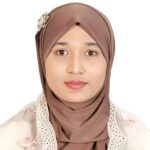 Parmin Fatema, Asian University for Women (AUW), BD
Parmin Fatema is a writer and poet from northern Rakhine (Arakan) State, Myanmar. I live in the refugee camps in Cox’s Bazar, Bangladesh. I previously served as a female team leader with a humanitarian agency and now work as the AUW Laboratory School Coordinator & Rohingya Students Supervisor. I hold a B.Sc. in Environmental Science and am pursuing an MA in Education at the Asian University for Women. Through my writing and photography, I share my community’s experiences and struggles.