Beyond Frameworks: Embedding Quality Design Principles Organically in Faculty Professional Development

In professional development (PD) spaces, introducing instructional design frameworks can sometimes trigger resistance or disengagement, particularly when participants feel constrained by unfamiliar acronyms, rigid standards, or externally imposed structures. This session explores an alternative approach: integrating quality design principles in an organic way that supports faculty development without overt reference to specific frameworks.

Our district includes ten individually accredited colleges. The majority of our teaching staff are adjunct faculty. We designed our PD workshops in alignment with our Teaching and Learning Competencies and embedded research-based best practices for course and content design, accessibility, learner engagement, and assessment clarity. These workshops were guided by various frameworks, such Quality Matters (QM) and Universal Design for Learning (UDL), though we intentionally avoided naming the sources directly. Instead, we focused on modeling best practices, providing hands-on application, and fostering reflective dialogue. The result? Greater buy-in, meaningful engagement, and increased participant confidence in implementing high-quality instructional design strategies.

Whether you’re a faculty developer, instructional designer, or academic leader, this session offers a fresh perspective on advancing course quality by meeting people where they are—and helping them grow beyond what they thought was possible. Attendees will leave with strategies for incorporating similar approaches in their contexts.

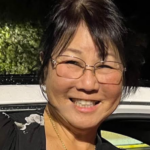
Carla GhanemCarla Ghanem, Maricopa Community College District, US

Dr. Carla Ghanem is an instructional designer for the Maricopa Center for Learning and Innovation at the Maricopa County Community College District. Her interests include course and assessment design, educational technology, usage of emerging technology, such as Artificial Intelligence (AI). Additionally, she is interested in approaches to course design leveraging hybrid, HyFlex, and online (synchronous and asynchronous) environments. Carla has been designing, developing, and facilitating courses district-wide on technology (including AI, multimedia, digital tools, etc.), learner-centered teaching practices, assessment, classroom management, etc. More recently, she has been leading district-wide accessibility efforts in alignment with WCAG 2.1 Level AA guidelines. She is actively engaged in professional groups worldwide, such as AI in Education, AI and Instructional Design, etc. She received her Ph.D. in Interdisciplinary Applied Linguistics & Cultural Studies from The University of Texas at Austin, where her dissertation focused on instructors’ identities and teaching practices, specifically with regard to teaching culture. She has three M.A.s in American Studies, Applied Linguistics, and German, an M.Ed, and an M.S. in Mathematics.

TCC Hawaii invites faculty, researchers, librarians, counselors, student affairs and student support professionals, graduate students, administrators, and consultants from around the world interested in evolving technologies and learning practices to submit proposals for this online conference.

Amplifying Voices: Using AI for Creative and Intentional Inclusivity in Online Learning

Minoritized students experience a lower sense of belonging and demonstrate lower success and graduation rates than majority students (Johnson, 2022). As online education evolves and student populations become increasingly diverse (American Council on Education, 2024), creating inclusive learning environments for all students is more critical than ever.  As Tan et al. (2025) note, AI tools offer teachers “enhanced flexibility and efficiency in content creation and personalized learning” (para. 4). A recent study, however, concluded that many online faculty feel their ability to create effective, inclusive course content is limited by either inexperience or lack of autonomy (Vice et al., 2025). This presentation will focus on practical and actionable ways instructors can leverage Artificial Intelligence (AI) tools to enhance diversity and inclusion in their online classrooms. Drawing inspiration from recent student survey data that highlight both the need for and potential pitfalls of inclusivity efforts, this presentation will explore how AI can assist instructors in crafting more culturally responsive assignments, generate diverse content, and foster a greater sense of belonging for marginalized learners (Tan et al., 2025), emphasizing the role of human creativity and ethical responsibility in the era of AI-assisted teaching and learning.

Josef Vice, Purdue University Global, US


Melissa Bahle, Purdue University Global, US

Professor Melissa Bahle (she/her) is a full-time faculty member in the English & Rhetoric Department at Purdue University Global.  She holds an M. Ed in English Language Learning from Western Governors University. In addition to her teaching career, she is a published poet and the Poetry Editor of The Gauge Literary Journal. She is also the Vice-president of the Pride@ Purdue Global ERG. Committed to community service, Mrs. Bahle founded Project Empathy, an initiative that provides food and clothing to the homeless through Blessing Boxes and seasonal donation drives. Her diverse skill set spans instructional technology, editorial work, and community engagement, reflecting her unwavering commitment to education, creativity, and social impact.


Dora Finamore, Purdue University Global, US

Dr. Dora Finamore, is a Professor in the School of Business at Purdue University Global and served as a past Senate member. She is a licensed clinical mental health counselor and registered play therapist.
Their most recent publication is ‘Fixed And Growth Mindset In Education And How Grit Helps Students Persist In The Face Of Adversity.” Her research interests are motivation and learning, multicultural belonging, mindset, positive psychology, and resilience. Her publications include the relationship between learning and motivation, positive psychology, emotional intelligence, mindset and resilience. Dr. Finamore has taught undergraduate and graduate courses on multicultural psychology, academic strategies, gender studies and positive psychology.


Christine O’Neal, Purdue University Global, US


Stephen Velky, Purdue University Global, US

I’m a Learning Experience Designer and eLearning storyteller who creates interactive, memorable learning experiences. I thrive on transforming ideas into hands-on, scenario-based learning that sticks—whether it’s virtual training on AI in education, diversity and inclusion workshops, or skill-building experiences that empower learners. As a first-generation college grad, I understand the thrill of figuring things out from scratch. That perspective drives my work: collaborating with SMEs, co-creating solutions, and refining content so learners connect with what truly matters. AI and multimedia are my playgrounds. I design experiences that are inclusive, dynamic, and practical—helping learners apply knowledge in real-world contexts. Moments of clarity, creative breakthroughs, and seeing learners succeed are what fuel my passion. I aim to bring teams’ visions to life, crafting learning experiences that are engaging, effective, and joyful. Core Skills & Passions Learning Experience Design (LXD)AI-Enhanced Multimedia Design & Virtual TrainingDiversity, Equity & Inclusion WorkshopsScenario-Based Learning & Interactive ExperiencesCurriculum & Learning Media DesignADA / Universal Design PrinciplesAI Animation & Video Creation.

TCC Hawaii invites faculty, researchers, librarians, counselors, student affairs and student support professionals, graduate students, administrators, and consultants from around the world interested in evolving technologies and learning practices to submit proposals for this online conference.

Your Students, Your LMS, Your Data

Governmental education authorities use concepts like “data-informed decision making” as they make policy, and data literacy is therefore an important skill that is valued by colleges and academic departments. While instructional faculty may be able to access educational data from their governments and institutional research teams, we can also become data literate by focusing on our students and using the data that our learning management systems (LMS) contain.

Student interactions in online classes taught using systems like Canvas automatically generate some data, and we can proactively collect other information with native LMS tools. Like institutions that use data to inform decisions about resource allocation and future planning, we can use data to inform decisions about course design and how we spend our instructional time. Plus, these practices can be used within a semester to help our students right now!

We can begin at the beginning by gathering student information during the orientation week. This can help us prepare the online learning environment for them and get them started on the right foot. During the term, we can use student activity to assess how the course is going and guide students as they learn. At the end of class, their feedback and reflections can inform the self-assessment that is an important part of planning for future semesters.

In this session, we will explore four different ways to collect data from Canvas and see these used in a Canvas course. The Canvas tools that will be demonstrated include surveys and insights from Canvas Studio; similar data may be available in other learning management systems. You will leave with details on how to use these tools to collect the data that can help you become a better instructor and your students better learners.

Gregory Beyrer, Cosumnes River College, US

Gregory Beyrer is the distance education coordinator and a professor of history at Cosumnes River College and has been using technology to support teaching since the days of HyperCard. He was Instructure’s Canvas Educator of the Year for 2019 and a founding member of the Online Education Initiative Steering Committee. His history degrees include a C.Phil. from the University of California, Los Angeles, an M.A. from San José State University, and a B.A. from the University of California, Berkeley. He also has a B.A. in ethnic studies from UC Berkeley.

TCC Hawaii invites faculty, researchers, librarians, counselors, student affairs and student support professionals, graduate students, administrators, and consultants from around the world interested in evolving technologies and learning practices to submit proposals for this online conference.

Ungrading without Points

For students, ungrading encourages a mindset switch for each assignment from deficit (what’s the minimum score I need?) to growth (what can I learn?). For instructors, ungrading has a similar effect: Instead of spending our time dividing points among assignments, we can imagine what students can gain from each activity.

Ungrading is equitable because each activity is an opportunity to practice demonstrating learning. If a submission does not do this, constructive feedback helps students be successful with their resubmission. Each student receives individualized guidance and can resubmit as many times as they need.

Ungrading is culturally responsive because it allows students to choose how they demonstrate what they have learned. Instead of making everyone do the same assignment in the same format, students pick the method that works best for them.

Ungrading is empowering because each student determines their class grade. It gives them practice using evidence (the course activities they have completed) to support an assertion (the grade they have earned) to an authority (their professor).

Ungrading is especially suited for online asynchronous classes. This mode allows us to be flexible in our teaching and allows our students to be flexible in how and when they show up to learn. Learning management systems like Canvas have settings, tools, and features that make it possible to practice ungrading without points.

In this session, we will explore the concept of ungrading and see an example of a Canvas course set up to encourage practice, give choice, and enable self-determination of a class grade. The Canvas tools that will be demonstrated include self-assessment, Mastery Paths, and custom grade schemes; similar tools may be available in other learning management systems. You will leave with practical guidelines for Canvas course and activity settings that can be used to explore the parts of ungrading that fit you and your students best.

Gregory Beyrer, Cosumnes River College, US

Gregory Beyrer is the distance education coordinator and a professor of history at Cosumnes River College and has been using technology to support teaching since the days of HyperCard. He was Instructure’s Canvas Educator of the Year for 2019 and a founding member of the Online Education Initiative Steering Committee. His history degrees include a C.Phil. from the University of California, Los Angeles, an M.A. from San José State University, and a B.A. from the University of California, Berkeley. He also has a B.A. in ethnic studies from UC Berkeley.

TCC Hawaii invites faculty, researchers, librarians, counselors, student affairs and student support professionals, graduate students, administrators, and consultants from around the world interested in evolving technologies and learning practices to submit proposals for this online conference.

Teaching NGSS with Confidence: The Power of Digital Science Curriculum

As schools work to bring the Next Generation Science Standards (NGSS) to life, Technology-Enhanced Science Curricula (TESCs) are emerging as powerful but unevenly understood or enacted drivers of inquiry-based instruction. This presentation explores how a well-designed TESC can transform elementary science teaching by integrating pedagogy, content, and technology into a coherent learning experience. Digital scaffolds, 5E-aligned sequences, and flexible multimedia tools not only model high-quality inquiry but allow teachers to adapt lessons for cultural and contextual relevance. Yet challenges such as inconsistent training, variable implementation, and limited local alignment continue to influence impact. Additionally, it raises important considerations for schools and curriculum leaders.

Drawing from survey, interview, and learning-analytics data, this session highlights compelling evidence that TESC use can significantly boost teacher motivation, confidence, and instructional agency. Teachers reported that the curriculum reduced planning burdens, clarified NGSS expectations, and empowered them to make purposeful pedagogical decisions. Digital flexibility also expanded opportunities for differentiation, deeper reasoning, and authentic engagement.

Participants will gain insight into how TESCs like STEMscopes function as both instructional tools and embedded professional learning systems. Sharing research finding that supported teachers in real time as they develop stronger inquiry-based practice. The presentation concludes with actionable recommendations for implementation fidelity, leadership support, and equity-focused curriculum design. Attendees will leave with a clearer understanding of how to leverage TESCs to strengthen science instruction and sustain meaningful NGSS-aligned change.

Pam KoharaDr. Pamela Kohara, University of Hawaiʻi, Manoa Campus

Dr. Pamela Kohara holds a PhD in Learning Design and Technology from the University of Hawaiʻi at Mānoa. A former Science Resource Teacher supporting STEM instruction and teacher professional learning across K–12 settings, her work focuses on strengthening science teaching. Her research examines how technology-enhanced science curricula support elementary teachers in implementing the Next Generation Science Standards (NGSS). She is passionate about empowering elementary teachers to implement meaningful NGSS-aligned science instruction.

TCC Hawaii invites faculty, researchers, librarians, counselors, student affairs and student support professionals, graduate students, administrators, and consultants from around the world interested in evolving technologies and learning practices to submit proposals for this online conference.

Artificial Intelligence and Leadership in Small Businesses: A Hawai`i-Based Perspective with Broader Implications

This study examines how artificial intelligence (AI) is being adopted by small and medium-sized enterprises (SMEs) in Hawaii and explores the cultural, organizational, and leadership factors that shape this adoption. Drawing on survey responses from 87 SME leaders, the research identifies clear patterns in how AI is currently used, with adoption strongest in marketing analytics and customer service automation and considerably lower in leadership-oriented applications, consistent with global SME trends. The findings show that AI integration in Hawaii is not driven solely by technological readiness but is deeply influenced by cultural values emphasizing trust, interpersonal relationships, and community reputation. Leaders consistently expressed strong support for AI as an augmentation tool, particularly for improving insight, forecasting, and decision quality, aligning with established research on AI-assisted leadership rather than AI-driven automation. Barriers including cost constraints, limited technical expertise, and data security concerns further restrict adoption, reflecting widely documented challenges in SME digital transformation. Overall, the study underscores the importance of culturally informed, human-centered AI strategies for SMEs operating in relationship-based or geographically isolated contexts. These insights contribute to a broader understanding of how AI can be integrated responsibly and effectively within culturally distinct leadership systems.

Eduard Merc, University of Hawai`i at Manoa, US

Dr. Eduard Merc is a full-time Instructor in Information Technology Management at the University of Hawaiʻi at Mānoa. His work focuses on artificial intelligence in business education, data analytics, and decision intelligence. He also serves in the U.S. Air Force in a cybersecurity and data analytics role, bringing real-world experience into the classroom. He is currently developing the DIAL Framework to support AI-driven decision making in higher education.

TCC Hawaii invites faculty, researchers, librarians, counselors, student affairs and student support professionals, graduate students, administrators, and consultants from around the world interested in evolving technologies and learning practices to submit proposals for this online conference.

Beyond the 11:55 PM Phenomenon: How Online Students Really View Asynchronous Discussions

Asynchronous discussion forums remain central to online higher education, yet debate continues about their effectiveness and the degree to which they build meaningful learning community. While faculty perspectives are well documented, less is known about how online students themselves understand and value asynchronous discussions. This study reports results from a new national survey examining student attitudes toward the pedagogical, social, and motivational dimensions of these forums.

This project is the third phase of a multi-year research agenda previously presented at the TCC Online Conference. Prior faculty studies highlighted concerns about superficial posts, last-minute participation (“the 11:55 PM phenomenon”), limited peer interaction, and a “one-and-done” mindset. The present study asks: To what extent do online students share these concerns? Where do their perceptions align or diverge?

A 10-item Likert-type survey measured student views on depth of understanding, idea generation, community building, return visits, posting behaviors, and perceived value. Demographic items captured gender, age, major, educational level, and prior online experience. An open-ended question invited additional ideas for building learning community. The survey yielded 224 usable responses from students across the United States (77% completion rate).

Findings will compare student perceptions with two years of faculty data and identify actionable strategies for strengthening engagement in asynchronous forums. Implications for course design, discussion structure, instructor presence, and institutional expectations will be highlighted to support deeper, more community-centered online learning.

Mary Dereshiwsky, Northern Arizona University, US

I am a tenured Full Professor of Educational Leadership and Lead Research Faculty Member at Northern Arizona University. I develop and teach graduate online courses in research methods, statistics, and qualitative analysis. I also serve on dissertation committees in education and business. I live in the beautiful North Country of Flagstaff, Arizona, near the Grand Canyon.


Scott Carnz, LIM College,New York, NY, US


Joel Domingo, CityU of Seattle, USA

TCC Hawaii invites faculty, researchers, librarians, counselors, student affairs and student support professionals, graduate students, administrators, and consultants from around the world interested in evolving technologies and learning practices to submit proposals for this online conference.

Unroughening diamonds: FACET learning for five-faced transdisciplinary success

Rough diamonds gain value via their intentional cut, their purposeful facets. Brilliance shines through each facet integrated into the next. Likewise, learning is enriched by a five-faced FACET comprising: Fundamentals, Attractivity, Commitment, Engagement, and Transdisciplinarity. This presentation calls upon administrators, faculty, staff, and students to engage in a new pentagonal process of change where curricular boundaries are struggling to hold fast while simultaneously disintegrating. The presentation proceeds through five overlapping phases: First, the five features of FACET are defined. Second, they are exemplified. Third, they are integrated into each other. Fourth, they are noted as more than “cross-curricular,” as evident in educational institutions from Utrecht to Australia, passing through Canada and California, and through technologies as old as art and literacy education and as new as the Internet and AI.

It will be demonstrated through practical examples how subject-matter fundamentals can be taught in attractively engaging ways through teachers committed to reaching across monocurricular barriers to share style and substance, accepting expertise from intelligence communities not only real and campus-based but artificial and untethered from the real.

Katherine Watson, Santiago Canyon College, US

Dr. Watson has been teaching French, English, English as a Foreign Language, anthropology, linguistics, and zoosemiotics for more than half a century outdoors among farmworkers, in brick-and-mortar classrooms, via television, and online. Her “French Topics” was the first totally-online course offered in California, she co-created the Corporation for Public Broadcasting’s first online adjunct to a telecourse, and her research ranges from teaching and learning to animal communication, with an emphasis on transdisciplinarity.

TCC Hawaii invites faculty, researchers, librarians, counselors, student affairs and student support professionals, graduate students, administrators, and consultants from around the world interested in evolving technologies and learning practices to submit proposals for this online conference.

Integration of AI Tools in a General Education Course

General Education courses offer a great opportunity for faculty to integrate artificial intelligence (AI) tools in the classroom to increase faculty engagement and support student success.

This session will explore practical AI strategies a program chair and adjunct faculty member have leveraged to streamline instructional tasks which allows more time to focus on meaningful student interactions and personalized, substantive feedback. In addition, they will share how AI can be used to create engaging materials that can easily be updated to keep students workforce ready.

Participants will be able to identify practical AI strategies that streamline instructional tasks and how to leverage AI tools to create innovative course materials.

Teresa Handy, University of Arizona Global Campus, US

Dr. Teresa Leary Handy is Program Chair and Assistant Professor at the University of Arizona Global Campus (UAGC) and the inaugural Open Educational Resources Faculty Fellow. She leads OER initiatives, including UAGC’s first OER Day and OER Create Day and receiving a grant for her research project Each One, Reach One on faculty women of color. Dr. Handy co-chairs the Faculty Council and serves on multiple boards and is the founder and co-editor of the UAGC TLC Conference Proceedings. She is a former DEI Director who has published peer reviewed research and three children’s books addressing ability differences.


Bonita Bryant, University of Arizona Global Campus, US

Greetings, I’m Professor Bonita Bryant—educator, author, and advocate for excellence in online learning. With over 30 years of experience in adult education, I design engaging, student-centered virtual environments that promote connection, confidence, and success in diverse and global learning communities. As the creator of Adjunct PowerHouse, I empower instructors to teach with clarity and purpose, and I look forward to sharing practical strategies participants can immediately apply in their online classrooms.

TCC Hawaii invites faculty, researchers, librarians, counselors, student affairs and student support professionals, graduate students, administrators, and consultants from around the world interested in evolving technologies and learning practices to submit proposals for this online conference.

Preparing the Educator for an AI-Augmented Future: Identity, Roles, and Design in Human-Centered Learning

By the 2030s, artificial intelligence (AI) will have evolved into an ambient, multimodal presence, interpreting language, vision, and emotion with near-perfect accuracy. Within such an ecosystem, the educator’s purpose is no longer to deliver information but to design meaning. This session explores how educators can redefine their professional identity in an age when AI autonomously generates adaptive learning paths, real-time analytics, and emotional feedback.

Purpose: As AI becomes embedded in every aspect of education, effective teaching will still depend on the educator’s purposeful, human-centered design of learning experiences.

Objectives: Utilizing systems thinking and human-centered design, this session introduces five emerging educator identities shaped by future learning ecologies (depends on sources as to topics)

  • Learning Architect—curates AI-generated content into cohesive, values-aligned narratives.
  • Data-Informed Mentor – interprets analytics to nurture motivation, resilience, and growth.
  • Ethical Steward – ensures transparency, inclusion, and human oversight of automated systems.
  • Meaning Maker – using tools that reshape the classroom experience; connects learning to civic purpose and human creativity (Phillips, 2025).
  • Learning Ecologist – orchestrates multi-agent ecosystems blending AI tutors, peers, and communities

Benefits: Participants will use foresight-mapping and reflection tools to envision their “Future-Self 2035” and design a Future-Self Action Card outlining next-step skills and mindsets for AI-complementary practice.

Pamayla E. DarbyshirePamayla Darbyshire, University of Phoenix, US

Pamayla E. Darbyshire earned her Doctorate in Health Administration from the University of Phoenix, AZ. She has a master’s degree in nursing with a clinical nurse specialist focus on education and over 45 years of nursing experience. Dr. Darbyshire is a long-time member of Sigma Theta Tau International Honour Society of Nursing. In addition, she is a member of the Association of periOperative Registered Nurses (AORN) National Research Committee, engaged in grant approvals, annual Expo Poster Abstract reviews, and AORN guideline updates, and has co-authored for IJEMT, The AORN Journal, Phoenix Scholar, The Qualitative Report, and other peer-reviewed journals. She is a member of the Case Management Society of America (CSMA). Dr. Darbyshire’s commitment to the academic community is evident in her role as a mentor for College of Doctoral Studies students (UoPx) and the ANA mentor/mentee committee. Her research interests include case management, chronic disease, neurodiversity, and the application of artificial intelligence in higher education. She has presented at numerous virtual conferences to international audiences.


Carl Beitsayadeh, University of Phoenix, US

Carl Beitsayadeh is a seasoned academic and industry professional with a rich history in both education and technology. Holding a Master of Science in Mechanical Engineering from San Jose State University in California, he has dedicated over two decades to higher education. As a practitioner faculty member at the University of Phoenix, he has served in the College of General Studies and the College of Doctoral Studies, where he has actively participated in research.

He is a fellow with the Center for Educational and Instructional Technology Research (CEITR), College of Doctoral Studies (CDS). His scholarly pursuits include annual presentations at the UoPx Knowledge Without Boundaries (KWB) summit, presentations with the Teaching, Colleges & Community (TCC) Worldwide Conference, and numerous publications with peer reviewed journals, including IJEMT.

TCC Hawaii invites faculty, researchers, librarians, counselors, student affairs and student support professionals, graduate students, administrators, and consultants from around the world interested in evolving technologies and learning practices to submit proposals for this online conference.