Governmental education authorities use concepts like “data-informed decision making” as they make policy, and data literacy is therefore an important skill that is valued by colleges and academic departments. While instructional faculty may be able to access educational data from their governments and institutional research teams, we can also become data literate by focusing on our students and using the data that our learning management systems (LMS) contain.
Student interactions in online classes taught using systems like Canvas automatically generate some data, and we can proactively collect other information with native LMS tools. Like institutions that use data to inform decisions about resource allocation and future planning, we can use data to inform decisions about course design and how we spend our instructional time. Plus, these practices can be used within a semester to help our students right now!
We can begin at the beginning by gathering student information during the orientation week. This can help us prepare the online learning environment for them and get them started on the right foot. During the term, we can use student activity to assess how the course is going and guide students as they learn. At the end of class, their feedback and reflections can inform the self-assessment that is an important part of planning for future semesters.
In this session, we will explore four different ways to collect data from Canvas and see these used in a Canvas course. The Canvas tools that will be demonstrated include surveys and insights from Canvas Studio; similar data may be available in other learning management systems. You will leave with details on how to use these tools to collect the data that can help you become a better instructor and your students better learners.
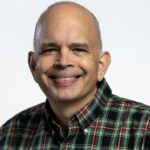 Gregory Beyrer, Cosumnes River College, US
Gregory Beyrer is the distance education coordinator and a professor of history at Cosumnes River College and has been using technology to support teaching since the days of HyperCard. He was Instructure’s Canvas Educator of the Year for 2019 and a founding member of the Online Education Initiative Steering Committee. His history degrees include a C.Phil. from the University of California, Los Angeles, an M.A. from San José State University, and a B.A. from the University of California, Berkeley. He also has a B.A. in ethnic studies from UC Berkeley.