This qualitative study investigates digital burnout and stress in tertiary students participating in blended learning environments, while documenting their extensive screen time. As an illustrative example, this research focuses on the MA in Education students at the Asian University for Women, representing a diverse cohort of day scholars and residential students from Myanmar, Bangladesh, Afghanistan, and East Timor, all of whom experience significant screen time through hybrid learning, online classes, research activities, and assignment completion. The hybrid learning model involves increased use of digital technologies, which may cause stress associated with technology. Thematic analysis of five semi-structured interviews and an autoethnographic diary revealed ten interconnected themes, including technology as everyday structure, hybrid workload and screen exposure, screen fatigue with physical symptoms, cultural or language adaptation challenges, diverse coping strategies, motivation or self-management techniques, mixed institutional or peer resources, inclusive or identity concerns, residential space stressors, and student recommendations for change. The findings document technostress manifestations such as techno-complexity, overload, and insecurity, guided by the Stressors-Strain-Outcome model and Self-Determination Theory, leading to emotional exhaustion, reduced motivation, and blurred work-life boundaries among diverse South Asian scholars. Results underscore burnout’s contextual variability in non-Western graduate contexts and highlight the need for sustainable hybrid designs.
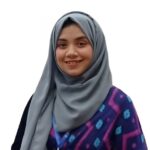 Tanbin Irfat, Asian University for Women (UAW), BD
Tanbin Irfat is an MA in Education candidate at the Asian University for Women in Bangladesh, researching digital burnout and stress in hybrid learning among diverse tertiary students. She holds a BA in English Language and Literature from International Islamic University Chittagong. As a teaching and research assistant, she develops digital learning resources and conducts qualitative/quantitative studies using tools such as SPSS, R, Kobo Toolbox, and exploring NVivo. Her interests include accessible educational technologies, digital inclusion, and socially responsive social studies
 Sadia Binth Shahin, Asian University for Women (UAW), BD
Sadia Binth Shahin is an MA in Education candidate at the Asian University for Women (AUW), Bangladesh. She serves as a Teaching Assistant and Independent Course Instructor at AUW, and a Research Assistant examining gender stereotypes in classroom practices. Her research explores digital burnout and student well-being in hybrid learning environments. She holds a BA in English from the International Islamic University Chittagong.